


Welcome to the first edition of The Adviser’s Perspective — our new quarterly insight into something clients don’t always get to see: how we think about the news, changes, principles that impact financial planning.
It’s a difficult task to keep up to date on everything, and an even trickier one to decipher what they mean, or their impact – behind the headlines.
So each quarter we’ll unpack some key updates, trends and common questions shaping our conversations with clients — what’s changed, why it may matter, and how it fits within a broader financial plan.
And as always, please feel free to contact us to let us know what you’d like to know more about – from our perspective, we’d love to hear from you!
With our best regards,
HPH Solutions
Current & topical
What’s happening right now, and what it may mean for your plan
Markets & ratesIf interest rates rise again… does that change the plan?Open section
Interest rates have risen again.
Does that change the plan?
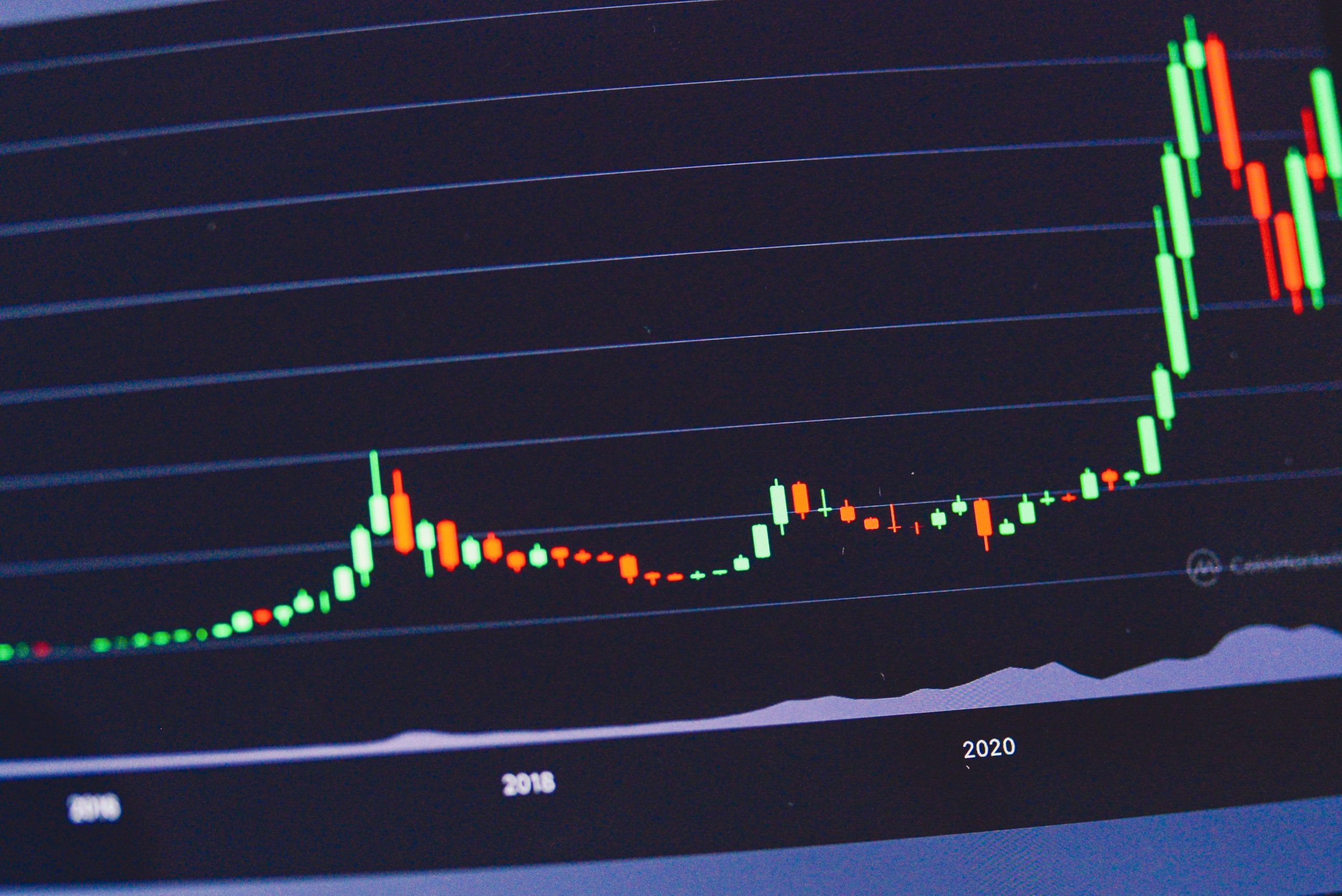
After a period in which much of the public discussion focused on when interest rates might fall, the Reserve Bank changed direction in early 2026.
The cash rate increased by 0.75 percentage points over the first five months of the year, reaching 4.35% in May, then held at that level in June.
The latest available inflation data showed annual CPI inflation of 4.0% in May — down from April’s 4.2%, though underlying inflation remained above the Reserve Bank’s target range.
- Borrowers: added pressure on repayments and household cash flow
- Savers: deposit rates may be more attractive
- Investors: shifting rate expectations can move asset prices, borrowing costs and sentiment
One of the challenges in financial decision-making is becoming too attached to a particular economic forecast. Only recently, many people expected rates to keep falling — conditions changed, and policy changed with them.
A robust plan shouldn’t depend on correctly predicting every Reserve Bank decision. It should allow for a reasonable range of interest rates, inflation outcomes and market conditions.
Is household cash flow still comfortable at current rates?
If repayments are already stretching the budget, that’s the first thing to address — before touching the investment strategy.
Is there enough accessible cash for foreseeable expenses?
A cash buffer means short-term costs don’t force decisions about long-term investments.
Debt, reserve, or invest — where should surplus cash go?
The right split depends on your interest rate, your risk tolerance, and how soon you might need the money.
Is too much long-term capital sitting in cash?
Cash feels safe, but holding too much for too long is its own risk — inflation erodes it quietly.
Does the strategy still suit its timeframe and purpose?
A strategy built for one rate environment should still hold up if conditions shift.
Testing whether the plan stays resilient if rates remain elevated for longer than expected.
Attempting to predict the precise timing of the next rate move.
Global & geopoliticalGlobal uncertainty, conflict and tariffs: what deserves attention?Open section
Global uncertainty, conflict and tariffs:
what deserves attention?

Geopolitical conflict, changing trade policy and tariff uncertainty continue to influence markets — affecting energy prices, transport costs, supply chains, currencies, inflation expectations and business confidence, and sometimes triggering sharp market reactions.
Geopolitical developments are important, but not every one requires an immediate investment response. Markets continually process new information — by the time an event dominates the news, some of its anticipated effect may already be reflected in prices.
We generally see uncertainty as a reason to review whether the plan is well prepared, rather than an automatic reason to abandon a long-term strategy. Volatility becomes most damaging when combined with inadequate liquidity, excessive concentration, or decisions made under pressure.
Ask yourself the questions below and also check out our summary from our Navigating Markets in 2026 seminar for deeper insights.
Has this materially changed your objectives or timeframe?
Most headlines don’t. If yours hasn’t changed, the plan probably shouldn’t either.
Is your portfolio overly dependent on one country, sector or theme?
This is the question worth asking before the headline, not after.
Could planned withdrawals force selling during a downturn?
Forced selling in a downturn is one of the few risks that’s genuinely avoidable with planning.
Is this change based on strategy — or on headline discomfort?
Discomfort is real, but it isn’t a strategy — it’s a feeling worth naming before acting on it.
Diversification, sufficient liquidity, and a clear decision-making process.
Repositioning a portfolio in response to every political announcement.
Federal BudgetSeparating announcements from decisionsOpen section
Separating announcements
from decisions

Federal Budgets generate a large volume of commentary — but not every announcement affects every household, and not every new measure requires immediate action.
Could this change household cash flow or after-tax income?
Yes for most households — the $1,000 instant deduction and staged tax cuts start 1 July 2026, with the $250 offset following in 2027–28.
Could it affect how super contributions or retirement income are structured?
Mainly if your total super balance is near or above $3m — Division 296 applies from 1 July 2026, with the first assessment after 30 June 2027.
Could it influence retirement, healthcare or aged-care planning?
Indirectly, through cost-of-living and aged-care funding measures — worth watching rather than acting on immediately.
Does it create a genuine planning deadline or opportunity?
Yes for property investors and trust structures — the negative-gearing change and trust rollover window both turn on specific 2027 dates.
A Budget measure should rarely be assessed in isolation. A tax concession may look attractive but matter less than reducing non-deductible debt. A super contribution may offer tax benefits but reduce access to capital. The value isn’t just in knowing what’s changed — it’s in understanding how it interacts with the rest of your position.
Information to be aware of
- $250 Working Australians Tax Offset from 1 July 2027, alongside a $1,000 instant tax deduction for work-related expenses for 2026–27
- Broader cost-of-living measures across health, housing and household support
- No major direct changes to super contribution caps, preservation or access rules for most Australians
Changes worth modelling or reviewing
- Negative gearing on established residential property proposed to be restricted from 1 July 2027 — new builds remain unaffected
- The 50% CGT discount proposed to be replaced by cost-base indexation plus a 30% minimum tax on gains, from 1 July 2027
- A new 30% minimum tax proposed on discretionary trust income from 1 July 2028
Changes that may need action
- Division 296 tax on total super balances above $3m applies from 1 July 2026 — first assessment after 30 June 2027
- A three-year rollover relief window for trust restructuring opens 1 July 2027
- Property already held before Budget night (7:30pm AEST, 12 May 2026) is proposed to be exempt from the negative-gearing change — timing of any new purchase may matter
Several of these measures are proposals only and may change before becoming law. Their impact depends heavily on individual circumstances — see our full Budget summary below for the detail behind each one.
SuperannuationNew rules for larger superannuation balancesOpen section
New rules for larger
superannuation balances

Division 296 large-balance threshold from 1 July 2026
General transfer balance cap, up from $2m
Division 296 tax applies to individuals whose total super balance exceeds the applicable large-balance threshold — $3 million for 2026–27 — reducing the tax concession on earnings attributable to the portion above it. People who’ve already commenced a retirement-phase income stream may have a personal transfer balance cap below $2.1m, because proportional indexation applies.
Super remains an important, often tax-effective structure — but maximising it isn’t automatically right for everyone. Tax matters, but shouldn’t be considered in isolation from accessibility, flexibility, investment risk, estate planning and the chance of future legislative change.
For larger balances, the central question isn’t simply whether super remains concessionally taxed. It’s whether the overall ownership and retirement-income structure still fits.
Superannuation
Tax-effective, but access is generally restricted until a condition of release is met.
Personal investments
Less tax-effective in many cases, but fully accessible whenever needed.
Company / trust structures
Can offer flexibility and asset protection, with their own tax and compliance considerations.
Debt reduction
A guaranteed, tax-free return equal to your interest rate — easy to underrate.
Accessible cash
The buffer that keeps a bad year from becoming a bad decade.
Future spending needs
The plan should be built around what the money needs to do, not just what it can earn.
Estate-planning objectives
Where the money goes after you needs its own decisions, made early.
Reviewing the complete structure and purpose of the household’s assets.
Chasing the lowest apparent tax rate without weighing the broader consequences.
Division 296 calculations can be complex and outcomes vary — personal financial and tax advice should be obtained before making changes.
Educational insights
Concepts worth understanding, whatever the market is doing
Retirement readinessAre you financially ready to retire?Open section
Are you ready to retire?

Many people begin retirement planning with one question — how much money will I need? It’s important, but it’s not the only one.
of Australians aged 50–66 worry they’ll run out of money in retirement
have a clear retirement plan (ASIC, April 2026)
What will everyday life look like after work?
Vague answers here tend to produce vague, overly conservative plans.
Which expenses are essential, which discretionary?
This distinction is what makes a spending cut in a bad year manageable rather than distressing.
How much should stay readily accessible?
Enough that a market fall never forces you to sell growth assets at the wrong time.
What happens after a significant market fall?
The honest answer to this question does more for confidence than any projected return.
How might health or aged care affect the plan?
Often the biggest unplanned cost in retirement — worth a conversation well before it’s urgent.
Is leaving an estate a priority?
This single answer can change how much of the plan is about spending versus preserving.
Retirement readiness is usually a mix of financial capacity, clarity about the life you want, confidence in the income strategy, flexibility when things change, and personal readiness to step away from work. Someone can hold substantial assets and still feel unable to retire — another can have fewer assets but far greater confidence, because the plan is clear.
A useful planning conceptCan market falls at different stages of retirement impact differently?Open section
Can market movements at different stages in retirement have different impact?

Two retirees can experience the same annual investment returns in a different order but finish with very different balances when they are regularly withdrawing money. This is sometimes referred to as sequence-of-returns risk.
A substantial market fall early in retirement can be particularly challenging. If withdrawals continue while investments are depressed, more assets may need to be sold to fund the same level of spending. That leaves less capital invested to participate in a later recovery.
By contrast, someone who is still working may be able to continue contributing through a downturn and avoid selling investments. That is why the transition from accumulating wealth to drawing an income requires a different planning lens.
Sequence risk does not mean retirees should avoid growth investments. Retirement can last several decades, and becoming too conservative may increase the risks posed by inflation and insufficient long-term growth.
It also does not mean everyone should hold the same amount in cash. A larger reserve can reduce the likelihood of selling growth assets during a downturn, but holding too much cash for too long may reduce expected returns and purchasing power.
Depending on the person’s circumstances, managing sequence risk may involve:
• keeping an appropriate level of accessible cash for near-term spending;
• matching different parts of the portfolio to shorter- and longer-term needs;
• maintaining a diversified investment strategy;
• using a documented withdrawal and rebalancing approach;
• identifying which expenses could be adjusted temporarily after a severe downturn; and
• regularly reviewing spending, income needs, investment risk and the remaining planning timeframe.
No approach can eliminate investment, inflation or longevity risk, and maintaining a cash reserve does not guarantee that growth investments will never need to be sold during a downturn.
The more useful question is not only:
What return could this investment produce?
What role does this money need to perform — and when is it likely to be needed?
Behind the numbersFinancial confidence is not the same as financial knowledgeOpen section
Financial confidence is not
the same as financial knowledge

It’s possible to understand investments, tax and super — and still feel uncertain making an important financial decision. Confidence tends to come from understanding where you stand, what you’re trying to achieve, which trade-offs are involved, what could affect the outcome, and what needs to happen next.
Financial confidence does not rely on certainty or perfect outcomes. It reflects a level of comfort with decision-making under changing conditions. Individuals who demonstrate financial confidence tend to understand their position and the rationale behind key financial settings.
More information doesn’t always create more confidence — sometimes it just creates more options and more uncertainty. The role of advice isn’t only to provide facts; it’s to organise those facts into a decision-making framework that reflects your objectives and circumstances. Good advice should support informed decisions. It should not imply certainty where certainty doesn’t exist.
Read our article below for more tips on how to build it.
Read the article
Financial Confidence: what it is and how to build it
From the firm
What’s new at HPH Solutions this quarter
Updates from HPH Solutions

Vision Financial
Vision Financial has joined HPH Solutions
Earlier this year we welcomed the Vision Financial team and their clients to HPH Solutions. Vision Financial has supported clients for almost 20 years and shares our commitment to long-term relationships and personal advice — bringing greater depth and resources while keeping the personal support clients value.

Our growing team
New faces, same great mission!
Our team is expanding, and we couldn’t be more excited about the new talent and expertise joining us in the last quarter! As we continue to grow, our focus remains exactly where it has always been, providing you with the highest quality advice and support for your financial journey!
A quick note on AI and call recording
Behind the scenes, we’re increasingly using AI tools to help our advisers prepare more thoroughly, take more accurate notes, and spend more of each meeting actually talking with you rather than typing. As part of this, client phone calls may be recorded and transcribed — which also helps with quality assurance and means nothing discussed gets missed or misremembered. If you’d like to know more about how we use these tools, just ask your adviser.
What would you like
our perspective on?
The financial questions that matter most aren’t always the ones attracting the biggest headlines.
Am I holding too much money in cash?
How do I know when I’m ready to retire?
Reduce debt, or invest the surplus?
How much market volatility can I really tolerate?
Which decisions matter before aged care becomes urgent?